
Where Jasper Arrest Reports Appear
For multi-day arrest narratives in Jasper County, start with the sheriff's press archive. Posts there cover checkpoints, wanted notices, investigations, and charges. Bond details and trips to Jasper County Jail appear too. The pace is irregular. Coverage is selective too. Treat it as chosen stories, not a full booking ledger for the past week.
Need current custody facts instead? The sheriff's all-inmate roster shows who sits in the jail right now. For releases and transfers, try the 48 Hour Release page. Day-of arrests belong on Arrested Today. The county recent-arrests hub handles record requests and other custody systems.
Coverage limit: A missing press item only means no story was selected. Arrests can still happen without one. An old story, in turn, says nothing about custody or wanted status today.
Read the Sheriff Archive by Date
A multi-day search works backward through dated material. Assume no fixed window.
- Open the official press landing page and note the date and headline of any relevant item.
- Read the procedural language exactly. Distinguish “wanted,” “person of interest,” “charged,” “arrested,” and “transported to jail.” These phrases describe different stages.
- Follow older archive pages when the date falls outside the landing page. Pagination demonstrates archive depth, but it does not prove that every booking received a post.
- Check the person against the live roster and recent-release page using the arrest number, date, agency, and charges when available.
- Save the source URL and the time checked. A press item can be corrected, removed, or superseded by later reporting.
The official press archive landing page displays the department's dated, paginated collection of selected public narratives.
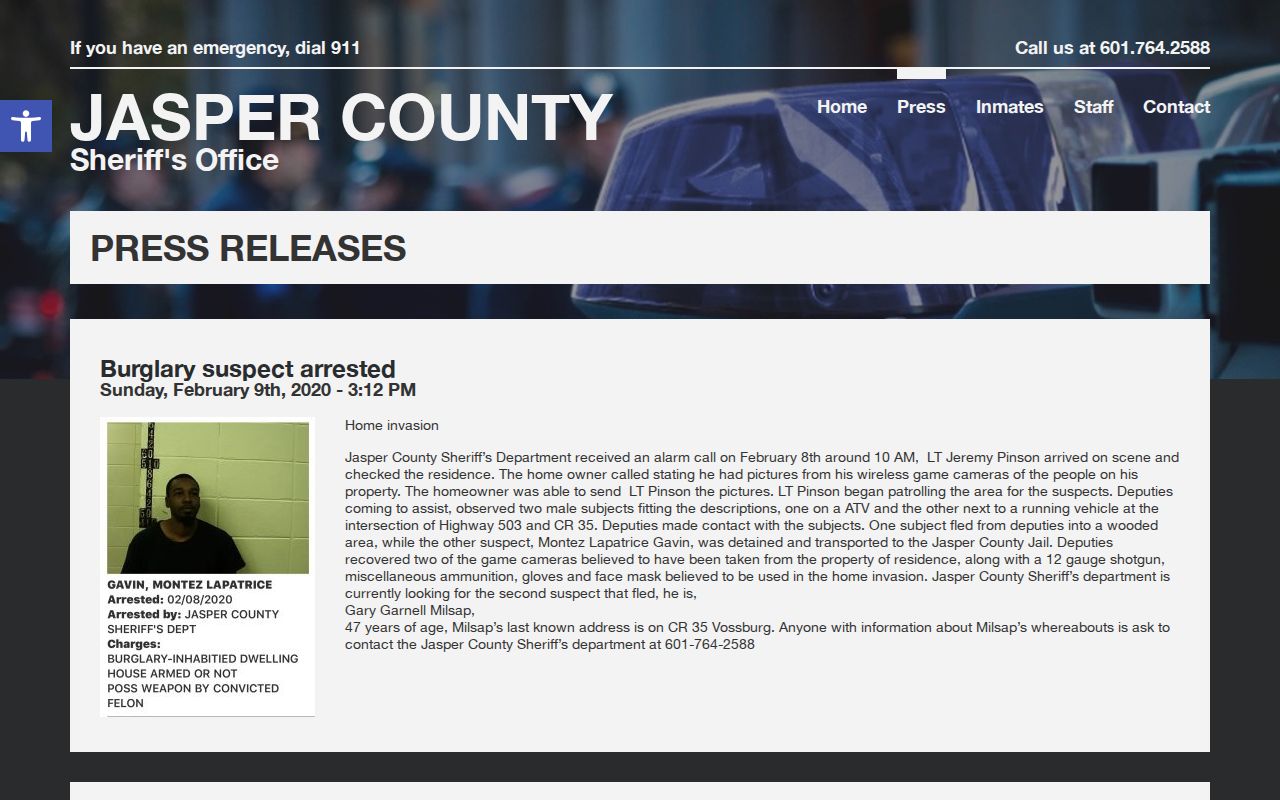
The archive works well as a timeline of Jasper County arrests. Still, a day with no entry does not mean the jail booked nobody that day.
What an Arrest Report Can Contain
A press story and a roster entry are two different records. Line up their fields side by side, and resist the urge to fill gaps in one with guesses from the other.
| Information | How to interpret it |
|---|---|
| Headline and publication date | When the department posted the narrative, which may differ from the arrest or incident date. |
| Reported event or location | Context selected for the story; it does not define the complete geographic scope of jail bookings. |
| Procedural label | Wanted, person of interest, charged, arrested, or transported each marks a different stage. |
| Named agency | The sheriff, a city police department, or a partner agency involved in the reported event. |
| Listed charge | A booking-stage charge unless a court disposition is separately cited. |
| Bond detail | Information reported in some stories, not a consistent roster field or proof of case outcome. |
| Arrest number and date | Roster identifiers useful for matching the narrative to a jail entry. |
| Release reason | A custody event from the separate release view, not a verdict. |
The public roster gives each person's name, gender, race, and age. It also lists the arrest agency, the charges, and an image. A formal booking timestamp is missing. So is a court case number. Housing unit and final disposition stay off it too. A copied photograph cannot supply those facts, and no booking-photo gallery is reproduced here.
A Selective Countywide Narrative
This local archive has real range. Checkpoint stories and arrest narratives appear in it. So do wanted-person notices, investigation updates, tip requests, and jail-transport accounts. Coverage stretches across Jasper County communities. It reaches well beyond the three incorporated towns with their own pages. Bay Springs, Heidelberg, Louin, Moss, and Stringer may each turn up in official statements. Rose Hill, Vossburg, Montrose, Pachuta, Stafford Springs, and Paulding may appear in news items too. A single mention of a place is not a reason. It will not support a separate city feed. The roster itself is countywide and multi-agency. Entries from Bay Springs Police and Heidelberg Police have appeared next to sheriff's bookings. Neither department runs a separate public city booking feed, and Louin posts no current log. So one arrest can leave a paper trail in two offices. The city police hold the incident report. The Jasper County Jail holds the booking record. Ask each for the piece it owns. Older official narratives describe safety checkpoints or investigations. Some ended in charges and a trip to the county jail. Those accounts matter because they tie an event to the booking process itself. Even so, they are selected department communications. They cannot be totaled into a complete crime trend. Nor can they serve as a weekly arrest tally for Jasper County.
From Wanted Notice to Follow-Up
Wanted notices carry a short shelf life. An old archive item may ask readers for tips about a Jasper County suspect. Weeks later, regional coverage can tell a different story. The person may have surrendered or been arrested. So hunt for the follow-up before repeating any earlier notice. The issuing agency can confirm whether the notice still stands, and a quick call settles it. Never approach the person yourself. Never publish guesses about where someone might be. Keep the source's exact wording, too. A "person of interest" is not "charged," and "arrested" only means custody was reported at that time, not that today's roster still holds the person.
Current status: Charges and wanted status change fast. A case can end many ways. The issuing agency tracks the latest version, and the court of record holds the final outcome.
Regional Reporting Adds Context
Regional news adds the timeline. The WDAM Crime section covers Jasper County and Heidelberg events more often than any other Pine Belt outlet. WDAM's regional crime page is the place to browse once the official county sources run dry. WTOK CrimeNet runs wanted-person items sometimes. Heidelberg stories occasionally reach WLOX and the Associated Press. These are editorial picks, not custody databases.
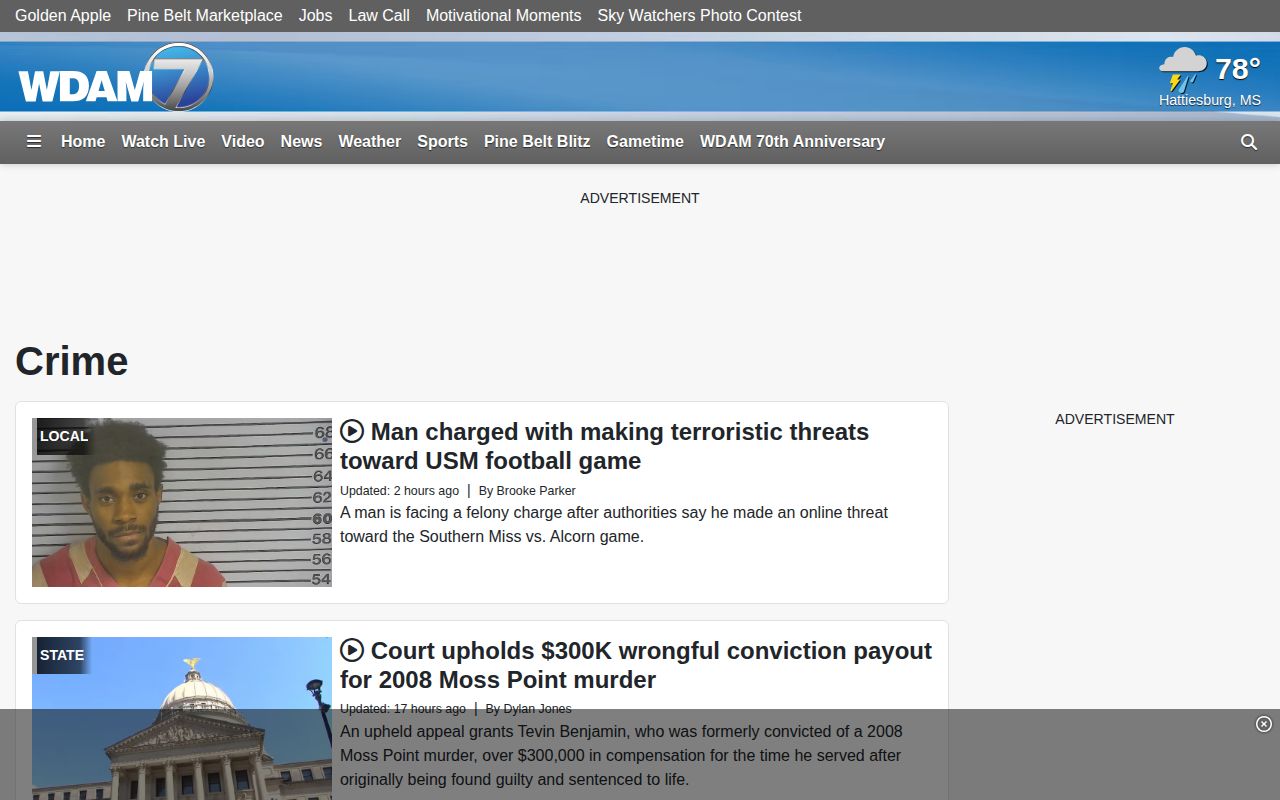
Save the story at its stable URL whenever one exists. Keep labels like “wanted,” “person of interest,” or “charged” exactly as written. Never sharpen them into stronger claims. A news piece can surface before the Jasper County roster refreshes. It can also appear years after a booking. A sheriff-supplied photo still does not turn that article into a live jail record. Custody questions belong to the official roster. For a full answer, pair the roster with the release view, an MDOC lookup for a state-prison transfer, and the court file for disposition. A report's publication date is not the arrest date.
The Local Newspaper Gap
Jasper County's local paper is gone. The Jasper County News printed its final edition on June 26, 2024. That closure pushed present-day arrest context toward sheriff communications and regional media. No continuous local newspaper blotter exists now. The gap reflects the county's source landscape, not proof that regional coverage catches every booking. One trap deserves a warning. A similarly named Jasper County News website serves Missouri. It has nothing to do with Mississippi arrests. When search results surface a familiar place name, check the date, state, agency, and county. Then rank your sources. Put jasperso.com first, identifiable regional outlets with stable article pages second, and the originating record office last.
Older Reports and Record Retention
The sheriff's press archive runs back years. The older official sheriff press page shows how deep it goes and how unevenly items are spaced. Web pagination, though, is not the county's legal retention schedule. Articles vanish while records persist. A jail, arrest, court, or incident record can outlive the story that reported it. The reverse also holds. An article that stays online proves neither current custody nor an active wanted notice. Treat these pages as dated context, and request the government record when the web narrative runs thin.
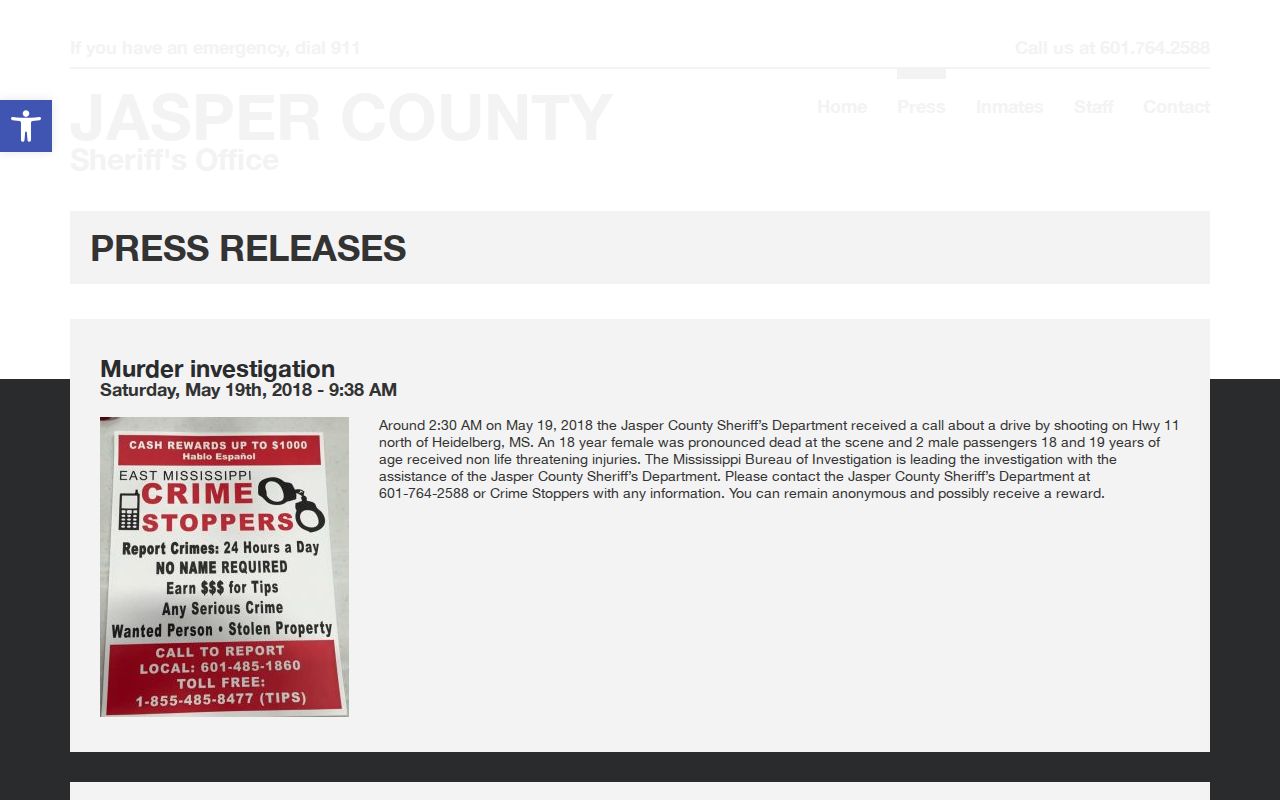
Mississippi's county retention schedule treats each record series differently. Jail dockets are generally permanent. Inmate case files and some felony arrest reports carry long retention periods, while other records sit on shorter schedules. A booking photograph fits no automatic category. Ask Jasper County directly how it classifies the specific image or report you need.
When a record is no longer online, request the underlying government record itself. Send a specific Mississippi Public Records Act request to the sheriff. Confirm receipt at 601-764-2588. Name the person, the approximate dates, and the arrest number if you have one, and say whether the request concerns a booking record, photograph, release entry, or incident report. If the county transferred historical material, the Mississippi Department of Archives and History research catalog offers a secondary archival route. It replaces nothing on the current jail roster.
Verify the Report’s Current Meaning
Ask what a source actually proves today. A fresh roster entry means listed Jasper County custody at the moment you checked. A release entry marks a transition. A press release shows only what the department chose to announce. News adds reported context. An MDOC entry reflects state custody, while a court file carries the procedural history and final disposition.
Note the date you checked. Keep the original link and use neutral attribution for every claim. The Jasper County Sheriff's roster itself warns that its information is supplied for convenience and cannot be certified for accuracy or authenticity through the page alone. For certified facts, precise timing, or a final result, contact the proper custodian, so a multi-year arrest report archive never gets mistaken for a live jail list.